.png)
Martini History, The Great Martini Debate. Gin vs Vodka, Shaken vs Stirred.
- 10 minutes ago
- 8 min read
The Martini is the little black dress of cocktails, if that dress had spent 100 years arguing with bartenders, spies, poets, and everyone’s uncle who “knows the right way” to make one.
It looks simple: spirit, vermouth, garnish, cold glass. That is the trick. The Martini is simple the way chess is simple. A few pieces, endless opinions, and somebody always thinks they’re winning.
This is the drink that can start a lively dinner-party debate before the appetizers hit the table. Gin or vodka? Shaken or stirred? Olive or twist? Dry or wet? Dirty or clean? Then James Bond walks in, orders it “wrong,” and somehow becomes the most famous Martini drinker in the world.
So let’s settle in, preferably with a chilled glass nearby, and unpack Martini history, the classic Martini recipe, the big arguments, and how to make a Martini at home without needing a handlebar mustache or a bartender’s PhD.

The Martini History began as a moving target
Like many great drinks, the Martini history did not appear one day wearing a tuxedo and speaking in a clipped accent. It evolved.
The earliest Martini-style cocktails likely came from the late 1800s, when drinks made with gin and vermouth were fashionable in American bars. One likely ancestor is the Martinez, a sweeter drink often made with Old Tom gin, sweet vermouth, maraschino liqueur, and bitters. Over time, tastes changed. Dry gin gained ground, dry vermouth replaced sweet vermouth, and the drink became sharper, colder, and more minimal.
By the early 1900s, the Martini had started to look more like the one we know: gin, dry vermouth, bitters in some versions, and a garnish. During Prohibition, gin was easier to make illegally than many aged spirits, which helped gin cocktails stay in circulation. After repeal, the Martini became a symbol of modern style. It belonged to hotel bars, supper clubs, home cocktail hours, and eventually every mid-century living room with a bar cart and a person in loafers saying, “Just a splash of vermouth.”
Martini History, like the drink itself, is less one clean origin story and more a family argument with excellent glassware.
A common myth says the Martini was invented in Martinez, California, for a gold miner. Another points to the Knickerbocker Hotel in New York. Another ties the name to Martini & Rossi vermouth. The honest answer is less tidy: the Martini emerged from a family of gin-and-vermouth drinks, then became famous enough for everyone to claim custody.
That messiness is part of the charm. Cocktail history often works that way. The bar napkin survives, but the facts get a little tipsy.
The classic Martini recipe is colder than your ex’s text
A classic Martini has only a few ingredients, so each one matters. Bad vermouth, warm gin, and a dusty jar of olives can turn a noble drink into something that tastes like a dare.
Here is a reliable starting point for a classic gin Martini.
Classic Martini recipe
Ingredients
2 1/2 ounces London Dry gin
1/2 ounce dry vermouth
Ice
Lemon twist or green olive
Instructions
Chill a coupe or Martini glass.
Add gin and dry vermouth to a mixing glass.
Fill the mixing glass with ice.
Stir for about 20 to 30 seconds, until very cold.
Strain into the chilled glass.
Garnish with a lemon twist or olive.
That ratio is 5 to 1, which gives you a dry but balanced Martini. It lets the gin lead while the vermouth still gets a speaking role.
If you want a wetter, softer Martini, try 2 parts gin to 1 part vermouth. If you want it drier, try 6 to 1 or 8 to 1. If you want to wave vermouth over the glass from across the room, congratulations, you have entered performance art.
The key is not to treat vermouth like an unwanted guest. Vermouth is wine-based and flavored with botanicals. It adds aroma, texture, and balance. Store it in the fridge after opening and use it within a reasonable time. Warm, oxidized vermouth has ruined more Martinis than poor life choices.
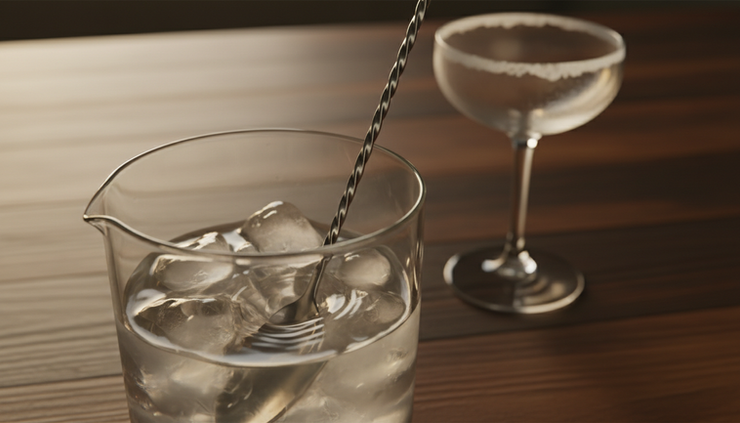
Gin vs vodka is the Martini’s longest-running family feud
The original Martini was a gin drink. Gin brings botanicals: juniper, citrus peel, herbs, spices, flowers, and sometimes flavors that make you wonder if a forest learned to flirt. Since the Martini is so stripped down, gin’s personality becomes the whole show.
A gin Martini is aromatic, crisp, and classic. London Dry gin gives a bright, juniper-forward version. More modern gins can lean citrusy, floral, herbal, or soft. If you enjoy flavor and character, gin is the historic choice.
A vodka Martini became popular later, especially in the mid-20th century as vodka rose in the American market. Vodka makes a cleaner, smoother, less botanical drink. Some people love that icy purity. Others say it is just very cold vodka in a nice outfit.
Both can be good. They just answer different questions.
Gin Martini
Classic, aromatic, botanical, more complex
Best with a lemon twist or olive
Great for people who like flavor from the base spirit
Vodka Martini
Clean, icy, smooth, more neutral
Best with a olives, twist, or a little brine
Great for people who like texture, coldness, and subtlety
For a Bourbon & Boxers kind of evening, the right answer is the one that makes the conversation better. Put out gin, vodka, olives, twists, and a good mixing glass. Let guests choose their fighter. Nobody needs to be exiled to the porch for preferring vodka. Unless they put blue curaçao in it and call it classic. Then porch time may be discussed.
Dry, wet, perfect, and other ways to measure your mood
The words around Martinis can sound like a weather report written by a bartender.
A dry Martini uses less dry vermouth. The drier the drink, the less vermouth.
A wet Martini uses more vermouth. This does not mean watery. It means more balanced toward wine and botanicals.
A 50/50 Martini uses equal parts gin and dry vermouth. This older style has made a comeback because it is lower in alcohol, very aromatic, and wonderful before dinner.
A perfect Martini uses both dry and sweet vermouth. It is less common now, but it belongs to the broader Martini family.
For easy home entertaining, try this simple ratio guide:
Martini style | Ratio | Best for |
Wet Martini | 2 to 1 | Softer, aromatic sipping |
Classic dry Martini | 5 to 1 | Balanced and crisp |
Extra dry Martini | 8 to 1 or less vermouth | Spirit-forward fans |
50/50 Martini | 1 to 1 | Aperitif hour and lighter pours |
The best move is to start at 5 to 1, then adjust. A Martini is not a loyalty oath. It is a recipe.
Shaken vs stirred is about texture, not morality
The classic rule is simple: drinks made only with spirits, vermouth, or liqueurs are stirred. Drinks with citrus juice, cream, egg, or cloudy ingredients are shaken.
A Martini, being mostly spirit and vermouth, is traditionally stirred. Stirring chills and dilutes the drink while keeping the texture silky and clear.
Shaking chills the drink fast, adds more dilution, and creates tiny air bubbles. The drink may look cloudy for a bit and feel lighter, sharper, and more bracing.
So why did James Bond order his Vesper Martini “shaken, not stirred” in Ian Fleming’s 1953 novel Casino Royale? Because it sounded cool. Also, the original Vesper was not a standard Martini. It called for gin, vodka, and Kina Lillet, a now-changed aromatized wine. Shaking that mix helped create a colder, punchier drink.
Bond did not invent the Martini. He did not even order the standard version. But he absolutely changed Martini culture. Three words turned a bartender technique into a global catchphrase.
“Shaken, not stirred” is less a rule and more a cinematic entrance.
At home, try both methods. Stirred is elegant. Shaken is colder and more dramatic. If you are wearing a dinner jacket, shaking feels fun. If you are wearing Bourbon & Boxers lounge apparel and deciding whether chips count as dinner, stirring still works beautifully.

Olives, lemon twists, Dirty Martinis, and the Gibson all have a job
The garnish is not just decoration. It changes the drink.
A lemon twist adds bright citrus oil. It makes a Martini smell fresh before the first sip. This is especially good with gin, since citrus lifts the botanicals.
An olive adds savory, salty depth. It can make the drink feel rounder and more snack-friendly. Also, you get a tiny snack in your glass, which is civilized behavior.
A Dirty Martini adds olive brine. The amount varies, but a good starting point is:
2 1/2 ounces gin or vodka
1/2 ounce dry vermouth
1/4 to 1/2 ounce olive brine
Stir or shake with ice, then strain and garnish with olives. Go easy at first. Olive brine can bully a drink like a karaoke singer with the only microphone.
A Gibson swaps the olive or twist for a cocktail onion. That one change makes the drink slightly savory, crisp, and charmingly odd. It is the Martini’s eccentric cousin who owns excellent shoes.
There are many types of Martinis, though the term has been stretched like a sweater in the dryer. Espresso Martinis, Appletinis, and Chocolate Martinis may be delicious, but they are not classic Martinis in the gin-vermouth sense. They are “Martinis” mostly because they arrive in a V-shaped glass and look ready to gossip.
How to make a Martini at home without overthinking it
A good Martini at home comes down to cold, fresh, and measured. That is it. You do not need a marble bar or a bartender who speaks only in riddles.
Keep the setup simple
You need:
A mixing glass or pint glass
A bar spoon
A jigger
A strainer
A chilled coupe or Martini glass
Good ice
Fresh vermouth from the fridge
B&B drinkware and entertaining accessories fit naturally here because the Martini is a hosting drink. A good glass makes it feel special. A clean bar towel, cocktail picks, and a small garnish tray turn a Tuesday into something with manners.
Use a ratio that works
For your first round, make the 5 to 1 classic:
2 1/2 ounces gin or vodka
1/2 ounce dry vermouth
Stir with ice until the mixing glass feels very cold. Strain. Garnish.
If the drink tastes too strong, add a little more vermouth next time. If it tastes too soft, reduce the vermouth. If it tastes warm, the issue is temperature, not philosophy.
Choose your garnish with purpose
Pick lemon twist for bright and crisp. Pick olives for savory and salty. Pick cocktail onions when you want a Gibson and a small sense of mystery.
For relaxed entertaining, set up a mini Martini station:
Gin and vodka
Dry vermouth on ice or kept chilled
Lemon twists
Olives and cocktail onions
Olive brine
Chilled glasses
Cocktail picks
Let people build their preferred version. It turns drink-making into conversation, which is very Bourbon & Boxers: good drinks, good company, no snobbery, and just enough ritual to make the evening feel upgraded.

The Martini debate is the point
The Martini has lasted because it refuses to sit still. It began as a gin-and-vermouth cocktail, turned drier over the decades, welcomed vodka into the family, got shaken by James Bond, dirtied up with olive brine, and dressed itself with onions, olives, and lemon peels.
The “right” Martini depends on the moment. Before dinner, a wet gin Martini with a lemon twist is hard to beat. After a long day, an ice-cold vodka Martini with olives might be exactly the right kind of quiet. For a party, Dirty Martinis bring the savory fun. For guests who like a curveball, pour a Gibson and watch eyebrows rise in approval.
The only real mistake is treating the Martini like a museum piece. It belongs in real life: on a kitchen counter while friends arrive, on a patio before dinner, beside a good playlist, or in your favorite glass after you decide the ordinary evening deserves better.
If this stirred up your thirst for more cocktail history, recipes, entertaining ideas, drinkware, gifts, and Bourbon & Boxers style, visit www.bourbonandboxers.net. Bring your curiosity, bring your friends, and maybe bring extra olives.


